Overview
Prism is a unified platform that powers the Global Seafood Alliance’s Best Aquaculture Practices certification process.
I led the product vision and design for Prism from the ground up—transforming a fragmented, outdated set of tools into a scalable, end-to-end ecosystem now used by facilities, auditors, and certification bodies around the world.
My contribution: I designed every core flow and dashboard, created the underlying system logic, aligned cross-functional teams, facilitated requirements, mentored designers, and built the interaction models that make Prism function. The platform is now live and actively used in GSA’s global auditing process.
Context & Opportunity
The Global Seafood Alliance certifies aquaculture facilities across the world under the Best Aquaculture Practices (BAP) program. Before Prism, the audit process was split across emails, spreadsheets, legacy tools, and inconsistent workflows. Stakeholders lacked a single source of truth, and processes differed from auditor to auditor, and from certification body to certification body.
The opportunity was to create one cohesive platform that supports auditors, certification bodies, facilities, and operations in a unified, transparent, and repeatable system—while laying the foundation for future programs, memberships, and expanded certification offerings.
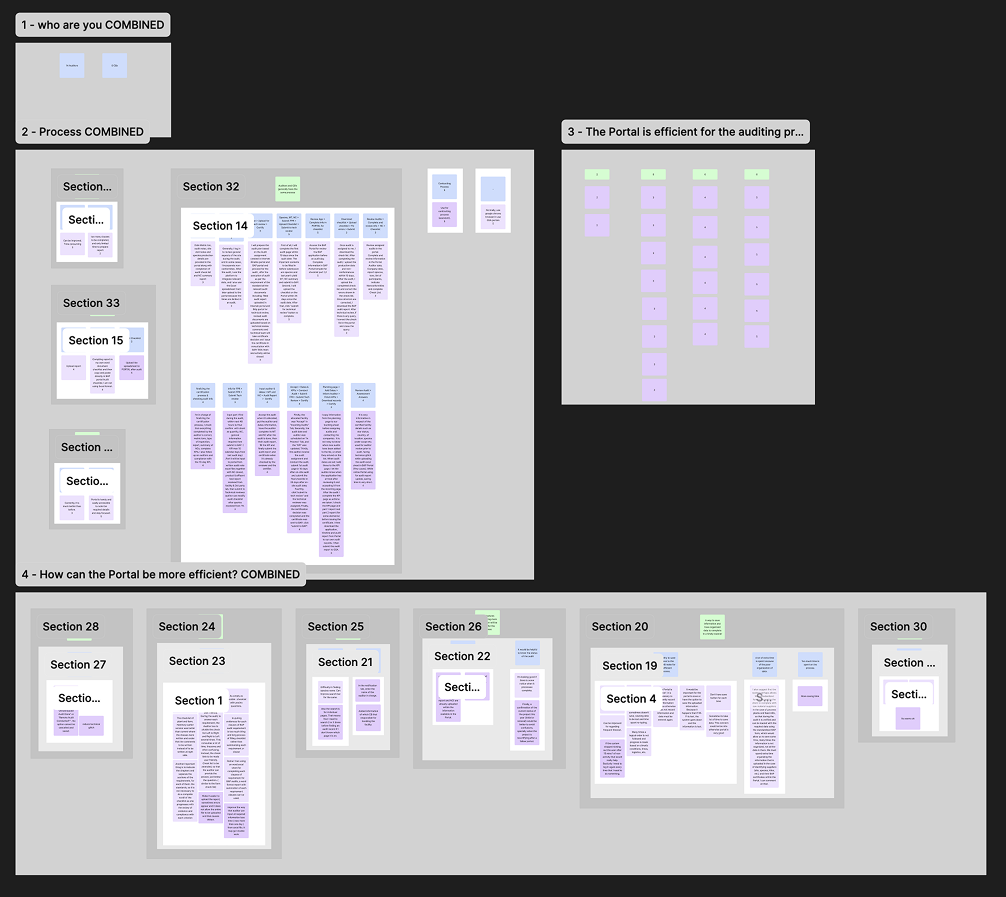
Survey results discovering the need for a new process between CB, Auditors & Facilities
AI Considerations in Regulated Systems
Because Prism supports a sensitive, compliance-driven ecosystem, we intentionally avoided the use of AI during its development. If I were approaching the project without risks, I could see AI becoming a helpful support tool—particularly for creating quick visual concepts to align with cross-functional teams and reducing early engineering estimation cycles.
My Role & Leadership
Although my level of engagement shifted over the years, I have led the design direction from the beginning and continue to own the UX vision today.
I was responsible for:
- Defining the IA and high-level product architecture
- Designing all dashboards and flows (personal, auditor, certification body, facility)
- Creating interaction models and detailed system logic
- Facilitating requirements and guiding product strategy
- Mentoring and managing a supporting designer (teaching UX and helping him reason through decisions)
- Leading cross-functional communication between developers, business, operations, and certification teams
- Translating ambiguous domain complexity into clear, validated workflows
- Ensuring scalability for future programs beyond BAP
Team Structure
- Dev team (Wholechain + GSA engineers)
- Operations
- Finance
- Marketing
- Certification Specialists
- Business Stakeholders
- 1 supporting designer under my direction
Across all of these groups, I became the person who created clarity, structure, and alignment.
The Design Challenge

Complexity at Every Level
Multiple user types with conflicting needs
Large volumes of structured and unstructured audit data
Varied certification body processes
Facilities ranging from small farms to global operations
Regulatory and compliance constraints

The Core Problems
Fragmented tools and communication channels
No consistent mental model for audits
Disorganized data storage and retrieval
Lack of visibility across roles
No unified workflow to tie users together
The challenge wasn’t just designing a product — it was designing the foundation of an entire ecosystem.
Process & Strategic Approach
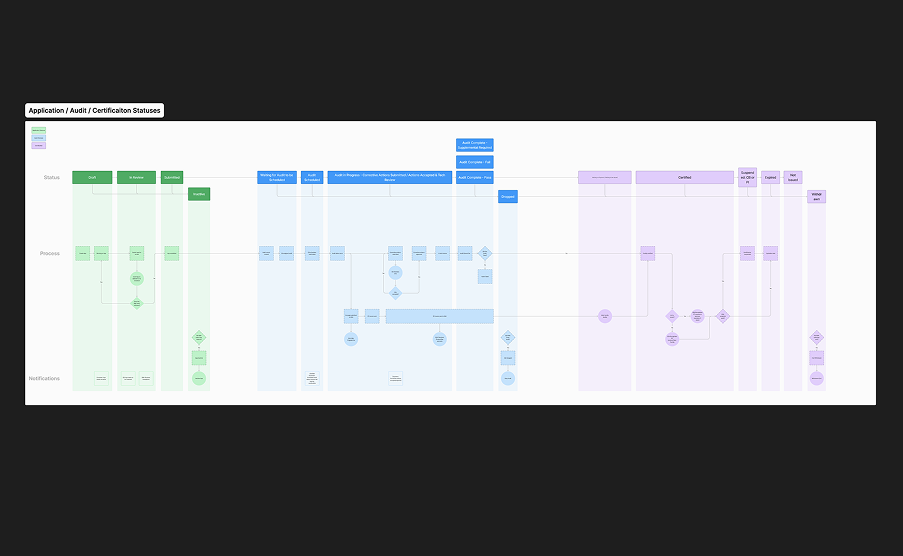
1. Requirements Workshops
GSA initially didn’t know what the full process should be — or how each user type should interact. I introduced requirement workshops and readouts, helping the team articulate needs, define edge cases, and align on a unified workflow.
My contribution was asking the right questions that exposed hidden dependencies and tensions between user groups.
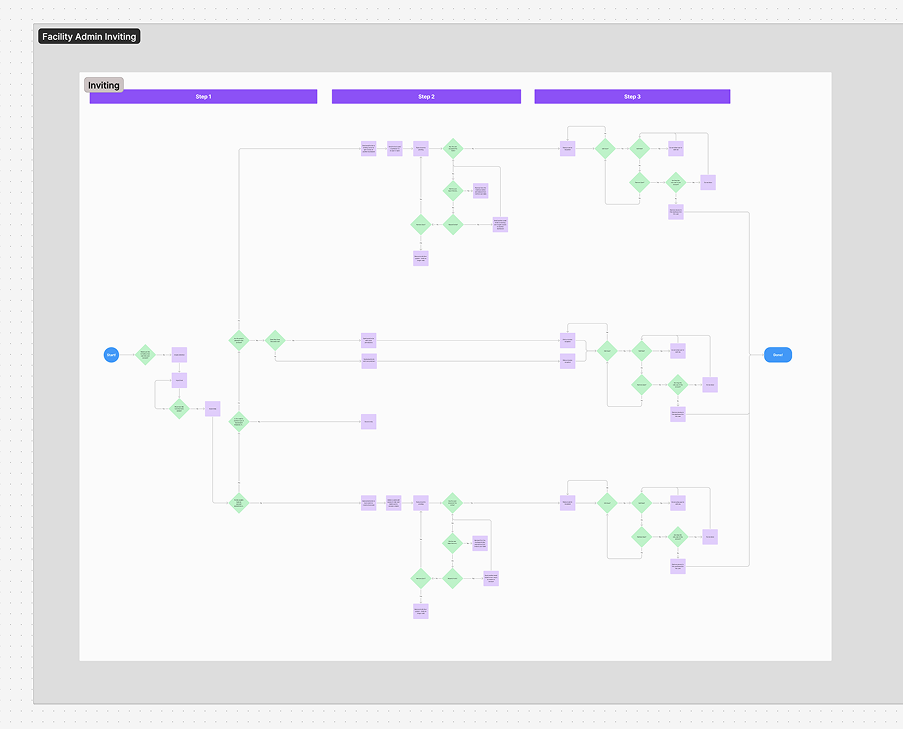
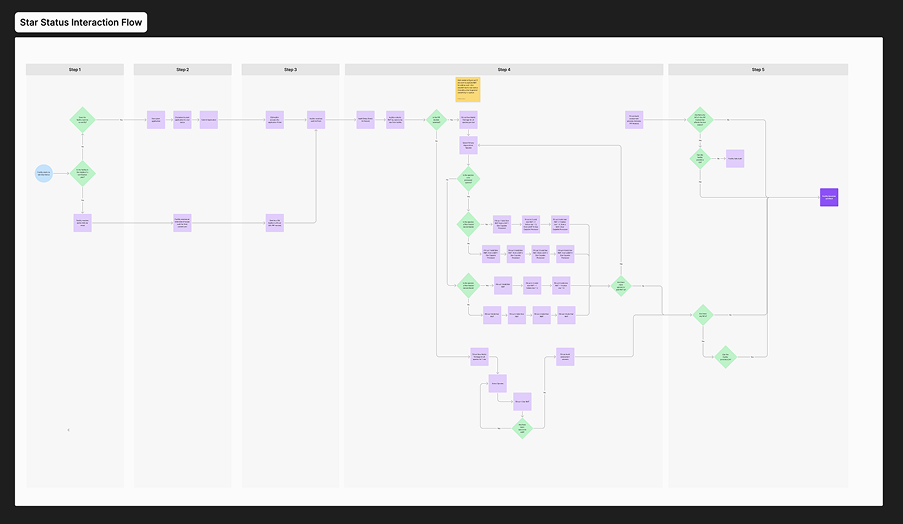
2. Interaction Modeling
Once concepts were verbalized, I translated them into detailed interaction flows that:
- Defined how auditors, CBs, facilities, and operations interact
- Clarified logic and decision points
- Became the blueprint for engineering
- Ensured every stakeholder shared the same mental model
These models became the single source of truth and were widely praised by GSA for reducing confusion and aligning the team.
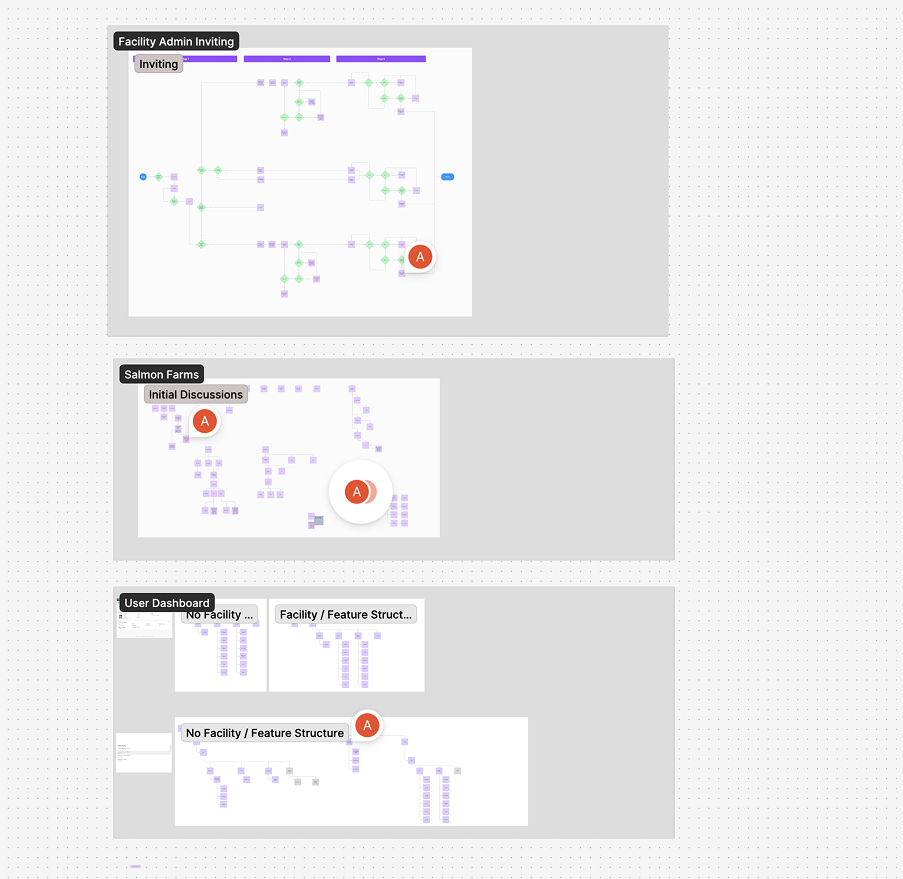
3. Information Architecture
The platform needed to hold a massive amount of information. I built an IA that:
- Prioritized user needs
- Balanced complexity with clarity
- Created reusable patterns
- Leaned on consistency to reduce cognitive load
- Supported future features and programs
This IA enabled multiple dashboards to “talk to each other” while still feeling intuitive.
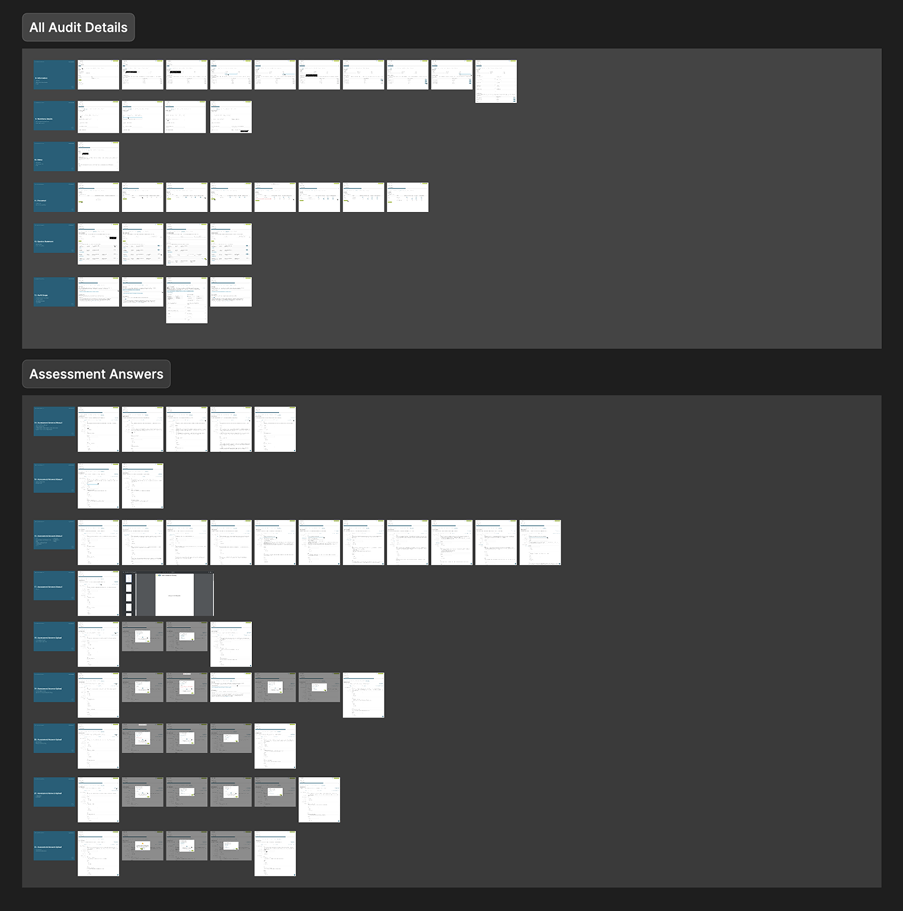
4. Full-System UX & UI Design
Four dashboards:
- Personal Dashboard — personalized tasks and quick access
- Auditor Dashboard — structured guidance, status visibility, audit execution
- Certification Body Dashboard — assigning, tracking, and managing audits
- Facility Dashboard — onboarding, audit progress, documentation
The supporting designer executed certain components under my direction, but all IA, workflows, and UI patterns originated from my strategy and design work.
5. Collaboration & Alignment
I wasn’t just the designer — I often acted as the product manager:
- Facilitated stakeholder meetings
- Led requirement definitions
- Managed communication with developers
- Made roadmap recommendations
- Created cross-functional alignment
This leadership became one of the strongest points of feedback from GSA.
Key Screens
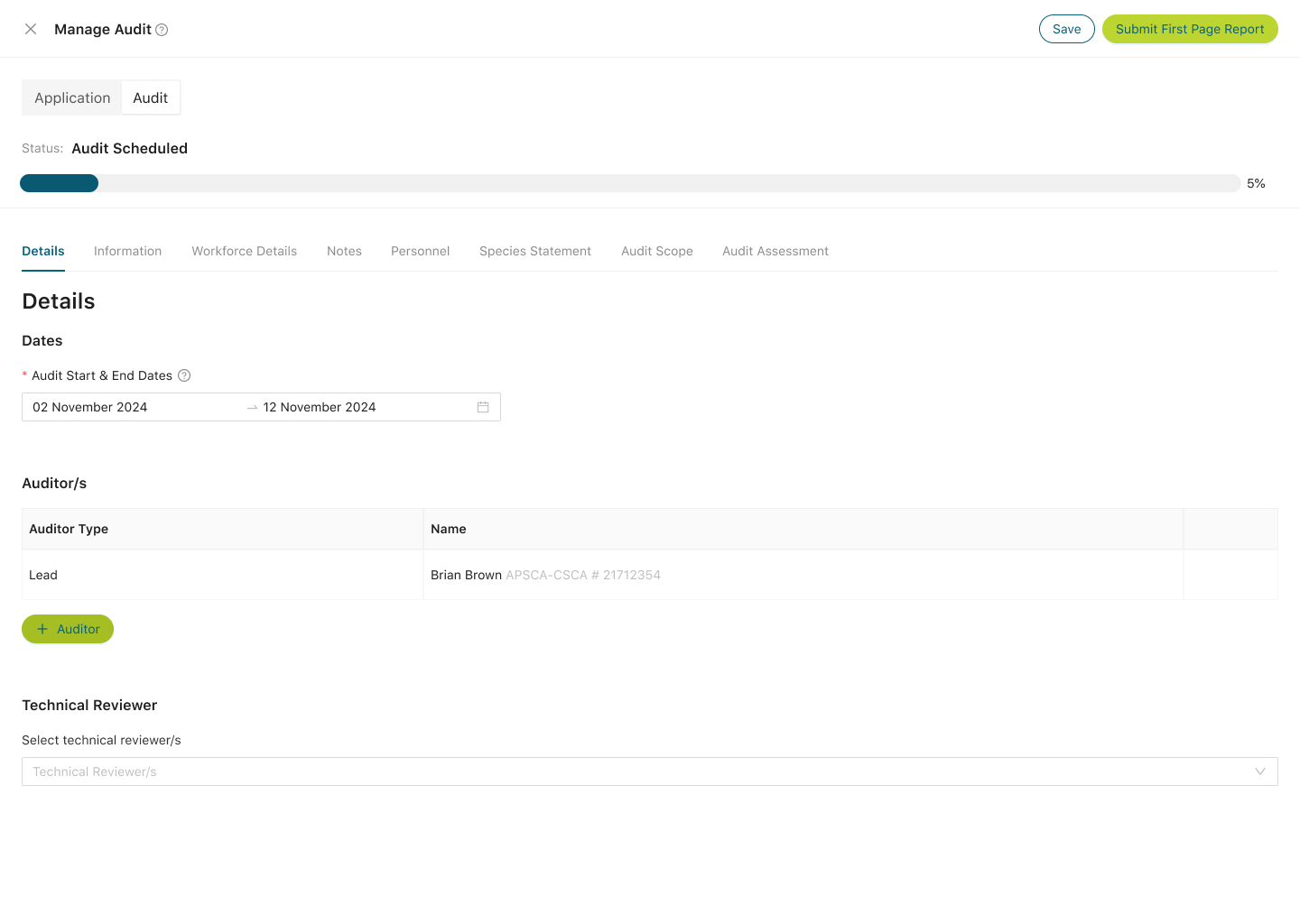
Auditor Dashboard
A structured overview that surfaces the most critical information first — enabling auditors to understand workload, track audit progress, and take action quickly.
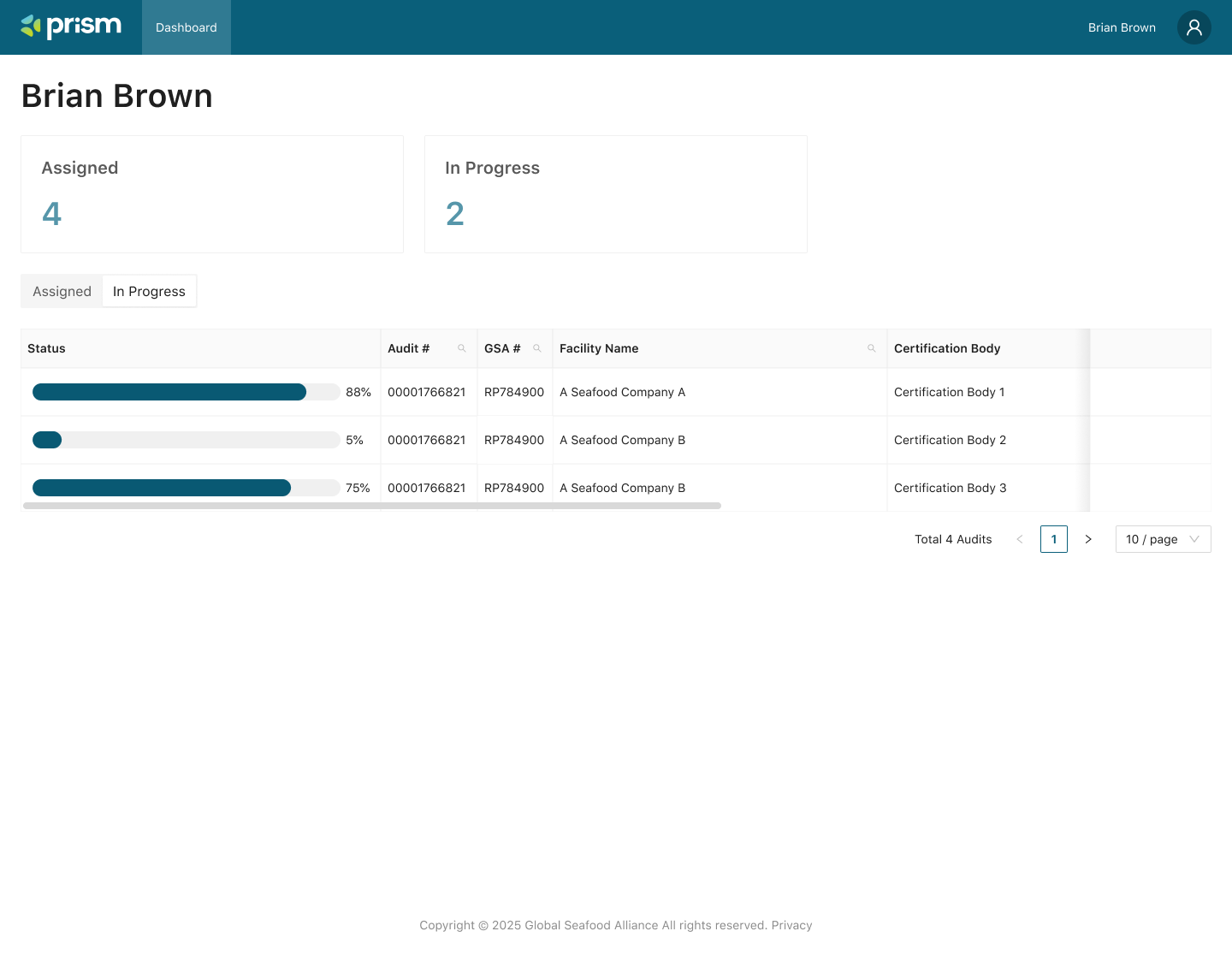
Personal Dashboard
A flexible, role-agnostic dashboard that intelligently adapts to each user’s responsibilities and tasks.
Audit Execution Interface
A guided, structured flow that turns complex audit requirements into a clear, step-by-step process — reducing cognitive load and ensuring consistency across auditors.
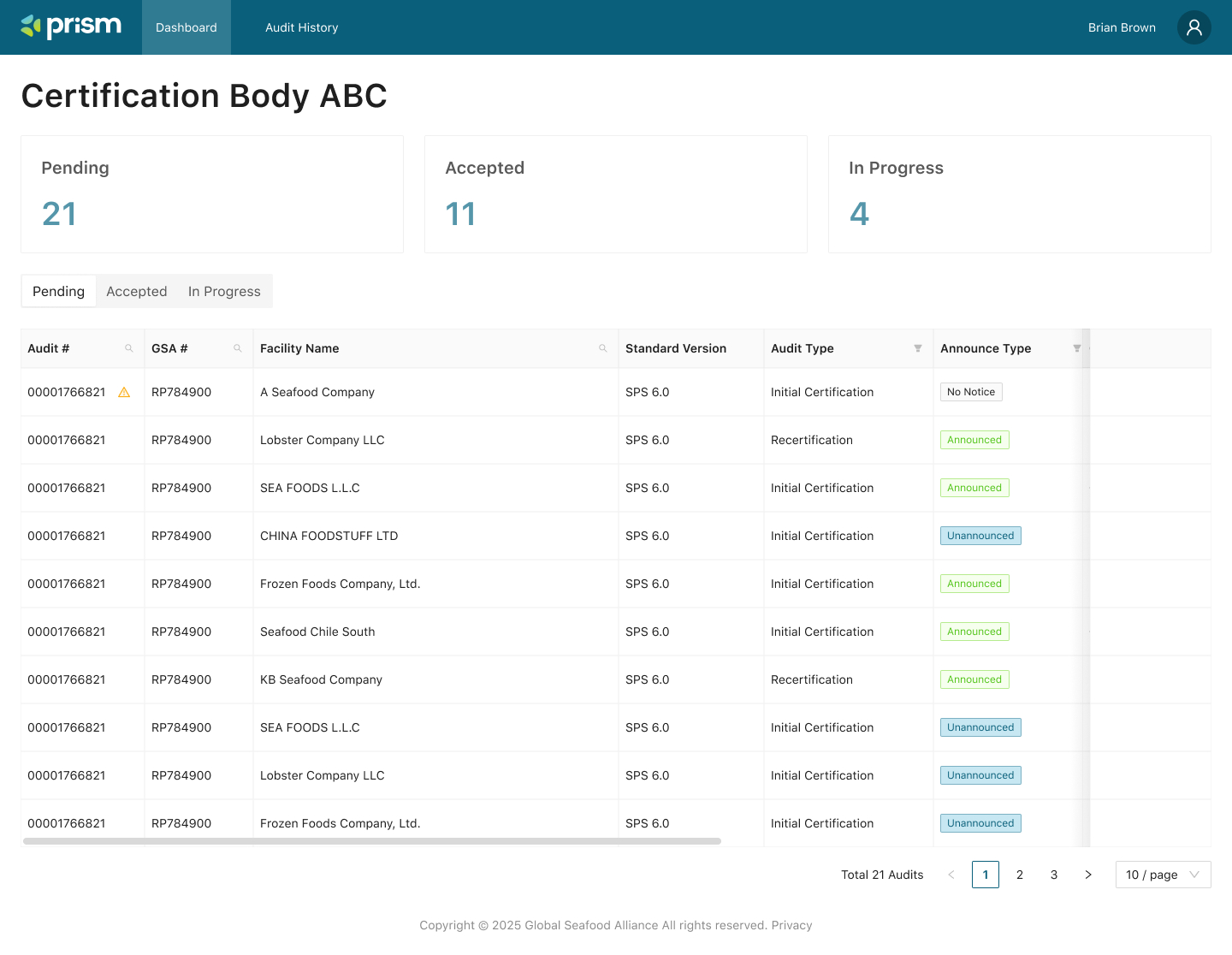
Certification Body Dashboard
A scalable management view that enables certification bodies to track audits, assignments, and upcoming work at a glance.
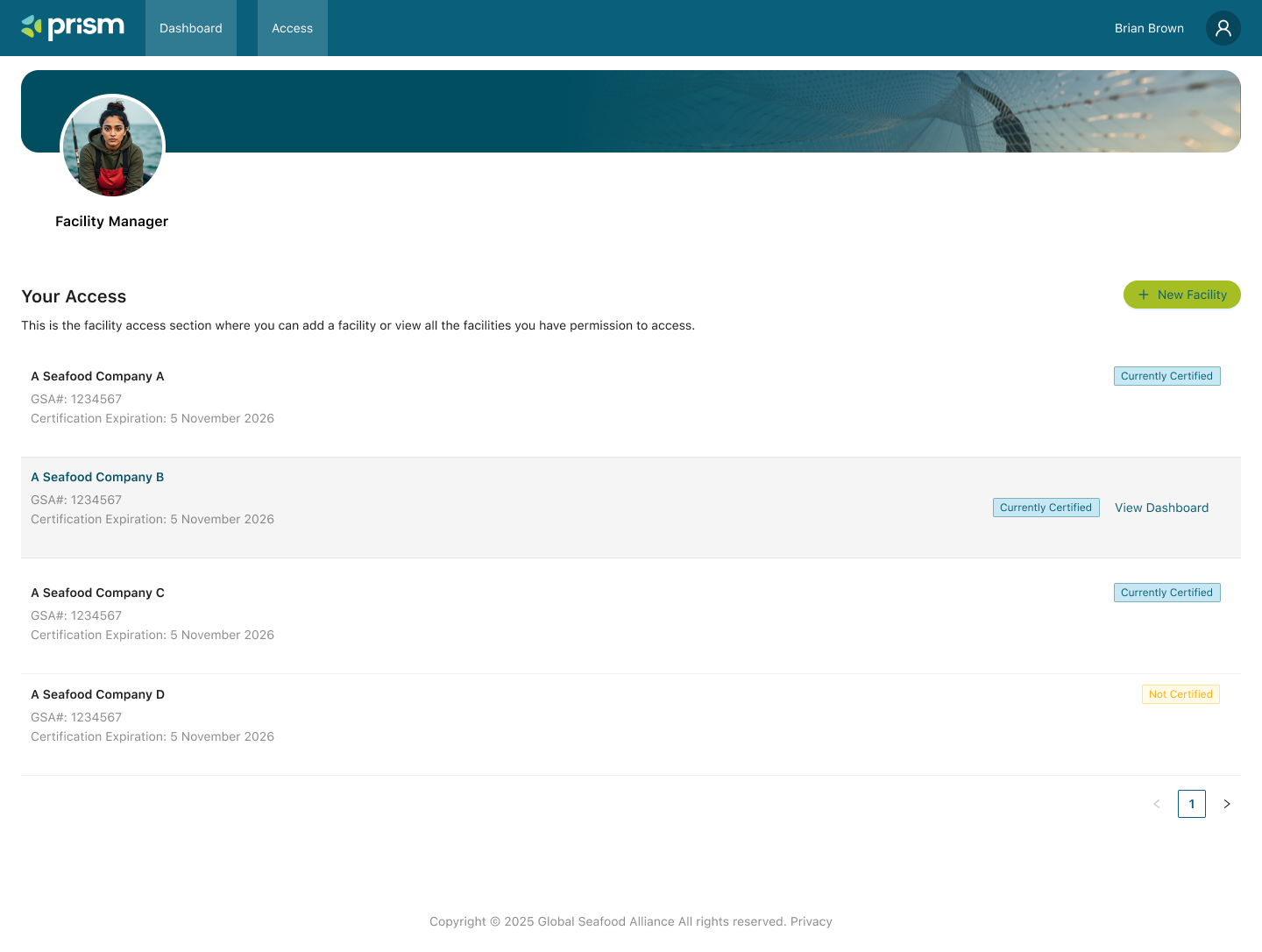
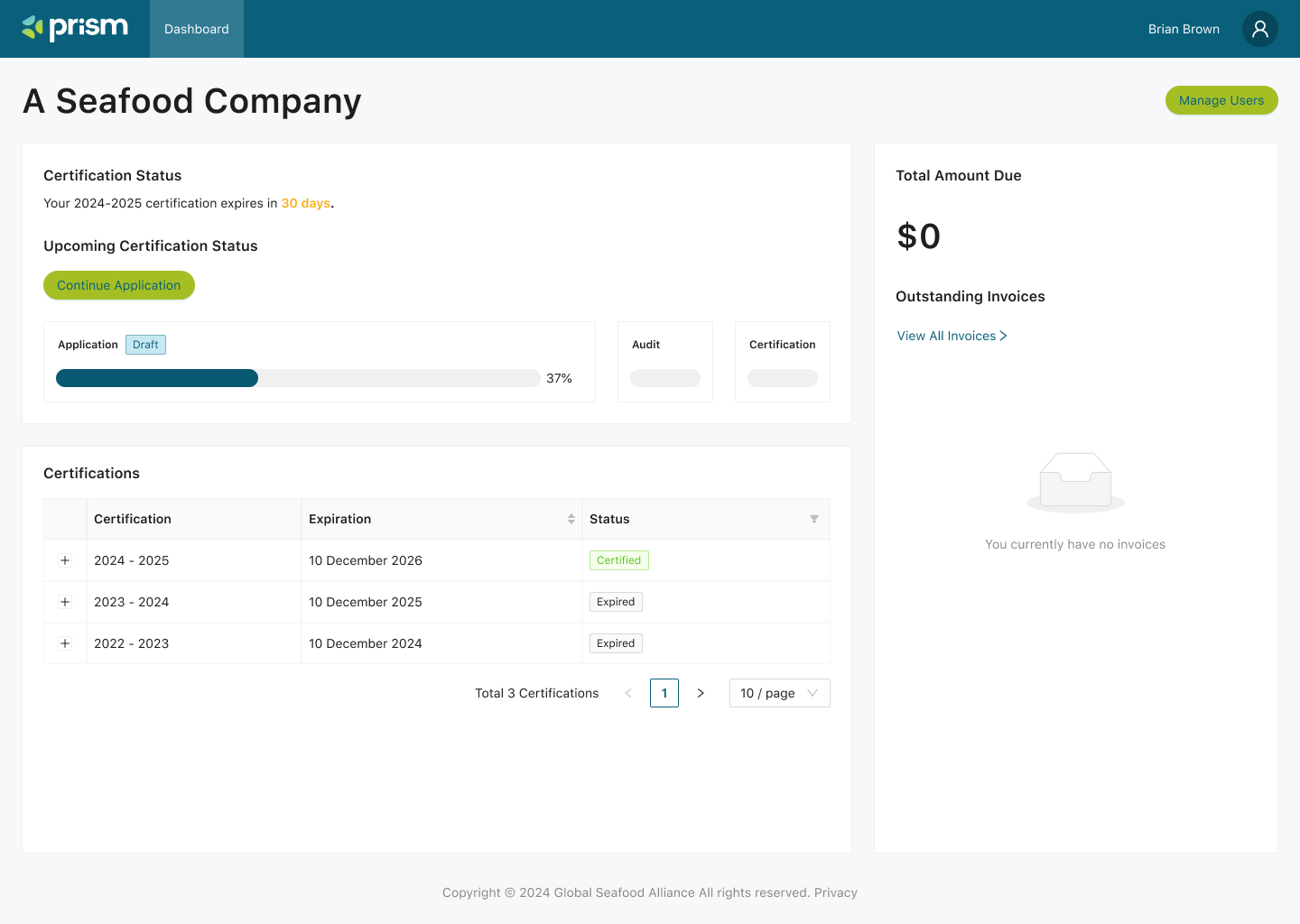
Facility Dashboard
A clear, organized view for facilities to track upcoming audits, manage required documentation, and monitor their certification progress in one place.
Outcomes & Impact
A new global standard for certification workflows!
Prism is now actively being used in GSA’s audit process. Facilities are onboarding, certification bodies are being assigned, and auditors are completing audits inside the platform.
Praise From GSA Stakeholders
- The clarity of the flows
- The ease of use compared to previous tools
- The structure and organization introduced
- The professionalism and leadership brought to the team
- How easy it is now to find important audit information
- How easy and consistent the application is
Leadership Growth
This project fundamentally grew my leadership:
- Working with stakeholders significantly more senior
- Leading full discovery → design → engineering collaboration
- Managing and teaching another designer
- Owning product and design direction simultaneously
This is a showcase of not just design ability, but systems thinking, leadership, and strategic product partnership.
Designed A System That Scales
Prism was built not only for BAP, but for future programs, memberships, and expanded certification features.
Improved Cross-Team Efficiency
The requirement structures I introduced are still in use today — even as they transition to managing them internally.
What This Project Demonstrates About Me
I bring structure to ambiguity.
This project started with no clear process. I created the foundation, strategy, and workflows that now support global certification.
I design scalable systems.
The IA, patterns, and flows I built became the backbone of a future-proof product.
I’m a collaborative, cross-functional leader.
I facilitate alignment across business, engineering, operations, and design.
I mentor others and elevate the work.
I guided a junior designer from execution to understanding, developing both his skills and the quality of the product.
I care deeply about users and the humanity behind the work.
Every decision was grounded in clarity, transparency, and reducing cognitive load for people performing complex, high-stakes work.
Prism is now the central platform supporting GSA’s global certification ecosystem—one that brings clarity, trust, and scalability to a process that impacts aquaculture facilities around the world.
My role extended far beyond design. I built structure, aligned teams, guided strategy, and created the systems that allowed Prism to scale from an idea into a living, breathing platform.
Looking Ahead
Prism has matured significantly, and I’m proud of the impact it has. As with any long-term product, rapid growth and cross-team collaboration naturally create areas ripe for refinement. With more time and creative ownership, I would focus on:
- Simplifying workflows that have expanded with feature growth
- Gather feedback from users as more facilities join the platform
- Creating tighter alignment between business priorities and user mental models
- Continuing to bring structure to complex, multi-stakeholder decision pathways
To me, this is the mark of a healthy product: it evolves, and the design evolves with it.
Thanks for stopping by! Explore more if you are interested :)
LET'S CONNECT
LinkedIn
+1 904.501.9003
athenagiani@gmail.com